
A 501(c)(3) in Anne Arundel County, Maryland.
Every street has a story. We made it readable for the church.
We build tools that help the church understand its neighborhoods, so it can love them with presence and Gospel clarity.


Not for lack of zeal.
The church has a presence problem, and not because it lacks zeal. Pastors enter neighborhoods they do not yet understand. Church planters set up in communities they have not yet read. Mercy workers arrive with programs that do not match the pressures their neighbors actually carry.
The Hood Shepherd exists to close that gap. We develop neighborhood intelligence rooted in Census data, field research, and biblical anthropology, and translate the complexity of a community into the kind of human portrait that makes incarnational ministry possible.
idea
The block doesn't need another program. It needs someone who is actually going to stay.
We are not building a church growth platform. We are building instruments for incarnational faithfulness, shaped by the conviction that the Gospel takes root where the church has taken up residence rather than merely run programs.
The work stands in the tradition of Harvie Conn's biblical urban theology: shalom as the diagnostic category, the imago Dei as the ground of every neighbor's dignity, and the incarnation of Christ as the model for ministry presence. Data can tell us who lives there. Only the Spirit can sustain what it costs to stay.
Written from field research, not from a spreadsheet.
Your street has a personality. Every block carries a story written in who lives there: their life stage, daily pressures, financial realities, and what they are quietly hoping for. Thirty neighborhood types cover the United States, matched to Census block groups. Twenty more cover Canada, matched to the smallest census areas Statistics Canada publishes. Type any address in either country and you get the guide written for that block.
Each guide carries a day in the life, the pressures a household is under, entry points for relationship, real conversation scenarios, and a Gospel presentation shaped for that context. It is not a demographic report. It is a field guide for a neighbor.
Families on older suburban streets, where one adult is often raising the children in a house built for two.
Large households on dense blocks, in homes built for fewer people than now live in them, where company is easy to find and a door you can close is not.
People on these blocks live with a hard situation that never turns into an emergency, while every kind of help still waits for one.
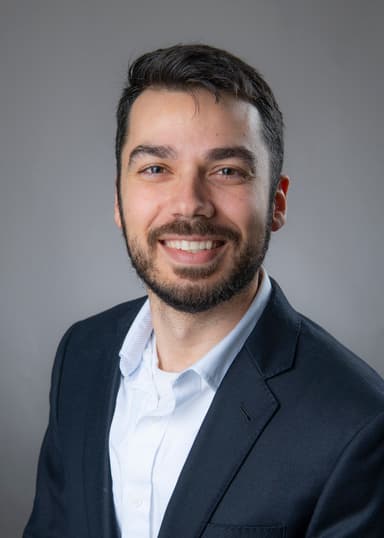
Aaron Rosa built The Hood Shepherd after years of ordinary ministry in Anne Arundel County, and after watching good people leave church ready to love their neighbors and then get stuck on Tuesday.
His work comes out of street-level mercy ministry through Harbor House in Annapolis, a lived reckoning with what it costs to be present in neighborhoods the church has largely passed by.
- B.S. Political Science — U.S. Naval Academy
- MJ — University of Maryland
- M.Div. student — Westminster Theological Seminary
- Military retiree
- Missionary — Faith Community Church
- Local missions partner — Bay Area Community Church, Annapolis
Aaron is a graduate of the U.S. Naval Academy and a former software engineer with Northrop Grumman. He holds a Master of Journalism from the University of Maryland and is completing his M.Div. at Westminster Theological Seminary, where he has been formed by the biblical urban theology of Harvie Conn.
He is the author of the forthcoming Hood Shepherding, which brings together urban planning theory, biblical theology, and incarnational practice. The Hood Shepherd is the applied expression of that vision.
The Hood Shepherd is the ministry. GospelGraph is the intelligence platform and map behind it, where the Gospel Desert Index and the tract-level analytics live.
The Hood Shepherd is donor-funded. Every field guide is free to read, and always will be. A tax-deductible gift keeps every guide and the address lookup open to any church that wants them.